

If you’re managing a commercial building, designing a new development, or simply exploring smarter drainage alternatives, you’ve likely come across the term vacuum drainage system. But what exactly is it, how does it work, and why are more UK businesses making the switch in 2026?
This complete guide covers everything you need to know, from the basic principles of vacuum drainage to real-world applications across sectors like healthcare, hospitality, education, and retail.
| Quick Summary: A vacuum drainage system uses negative air pressure (a vacuum) instead of gravity to transport wastewater through pipes. It uses up to 90% less water than conventional systems, requires less pipework, and works even where traditional gravity drainage isn’t possible. |
Table of Contents
- What Is a Vacuum Drainage System?
- How Does a Vacuum Drainage System Work?
- Key Components of a Vacuum Drainage System
- Vacuum Drainage vs Gravity Drainage: What’s the Difference?
- Benefits of Vacuum Drainage Systems in the UK
- Where Are Vacuum Drainage Systems Used?
- Are Vacuum Drainage Systems Suitable for Your Project?
- UK Regulations & Compliance
- Frequently Asked Questions
- Get Expert Advice from EVDS
What Is a Vacuum Drainage System?
A vacuum drainage system is a closed, pressurised wastewater management system that transports waste using negative air pressure — a vacuum — rather than relying on gravity. Unlike traditional drainage, vacuum systems can move wastewater horizontally, vertically, and even around obstacles, making them extraordinarily flexible in complex or constrained building layouts.

The technology was originally developed for use in ships and aircraft, where gravity-fed drainage simply isn’t possible. Today, it’s used across a wide range of commercial, industrial, and public-sector buildings throughout the UK and globally.
At EVDS (European Vacuum Drainage Systems), we supply and install Evac vacuum drainage solutions — one of the world’s leading vacuum system brands — to commercial clients across the United Kingdom.
How Does a Vacuum Drainage System Work?
The principle behind vacuum drainage is straightforward. A central vacuum station (or vacuum plant) continuously maintains a negative pressure within a sealed pipe network. When a vacuum toilet is flushed or a vacuum interface unit is activated, a valve opens briefly, and the pressure differential pulls wastewater rapidly through the pipes toward a collection tank.
The basic process:
- A user flushes a vacuum toilet or activates a drain point
- An interface valve opens, creating a brief pressure differential
- Negative air pressure pulls waste rapidly through the pipe network
- Waste collects in a central vacuum collection tank
- From the tank, waste is discharged to the sewer or treatment plant
This entire cycle typically takes just a few seconds, and the system resets immediately. Because the vacuum is constantly maintained, the system is always ready — there’s no waiting for tanks to fill or gravity to do its work.
Key Components of a Vacuum Drainage System
A complete vacuum drainage installation typically includes the following components:
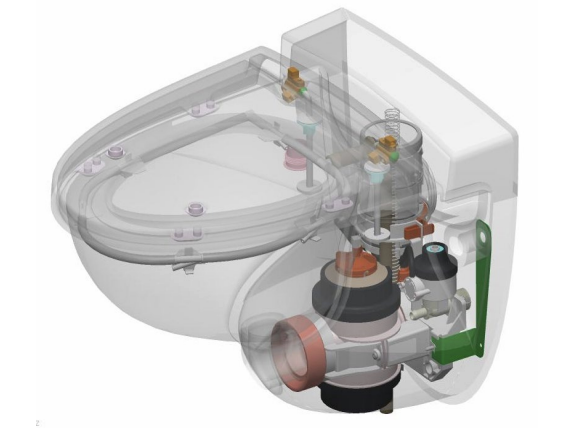
1. Vacuum Toilets
Vacuum toilets use just 0.5–1.2 litres of water per flush, compared to 6–9 litres for a standard WC. They’re designed to be highly durable and hygienic, with fewer moving parts than conventional toilets. Read more about vacuum toilets here.
2. Vacuum Interface Units (VIUs)
Vacuum interface units connect non-toilet waste points — such as sinks, showers, and floor drains — to the vacuum pipe network. They allow grey water to be incorporated into the same closed system. Read more about VIUs here.
3. Vacuum Piping Network
Vacuum pipes are smaller in diameter than gravity drainage pipes (typically 50–90mm vs 100–150mm for gravity systems), which means less material, faster installation, and the ability to run pipes in any direction.
4. Vacuum Collection Tank
All waste from across the building is drawn into a central collection tank, which is vented and typically located in a plant room or basement. From here, waste is pumped to the main sewer. Read more here.
5. Vacuum Plant / Vacuum Station
The vacuum plant (or vacuum station) is the engine of the whole system. It includes vacuum pumps and control systems that maintain the negative pressure throughout the pipe network continuously.
Why Vacuum Drainage Is More Than Just an Alternative — It’s the Future of Building Sanitation
Vacuum Drainage vs Gravity Drainage: What’s the Difference?
Here’s how vacuum drainage compares to conventional gravity-fed drainage across the key metrics:
| Feature | Vacuum Drainage | Gravity Drainage |
|---|---|---|
| Water per flush | 0.5–1.2 litres | 6–9 litres |
| Pipe direction | Any direction | Gravity slope required |
| Pipe diameter | 50–90mm | 100–150mm+ |
| Odour control | Closed system, no odours | Can emit odours |
| Installation flexibility | Very high | Limited |
| Maintenance | Lower long-term | Higher (blockages common) |
| Water savings | Up to 90% | Baseline |
Benefits of Vacuum Drainage Systems in the UK
1. Significant Water Savings
With water costs rising across the UK, reducing consumption is both an environmental and financial priority. Vacuum drainage systems use up to 90% less water than conventional gravity drainage — a major advantage for high-footfall commercial buildings such as offices, hospitals, schools, and supermarkets. Water Savings up to 90%: How Vacuum Drainage Supports Sustainability Goals
2. Design Freedom & Flexibility
Because vacuum drainage doesn’t rely on gravity, pipes can run horizontally, vertically, or around structural obstacles. This makes vacuum systems ideal for complex retrofits, historic buildings, below-ground installations, and developments where conventional drainage would be prohibitively expensive.
3. Superior Hygiene
Vacuum systems are fully closed and sealed. There’s no air exchange with the drainage network, which eliminates odours entirely and significantly reduces the risk of cross-contamination — particularly important in healthcare environments and food-handling facilities. Hygiene & Infection Control: Why Vacuum Systems Are Better for Hospitals & Food Facilities.
4. Lower Maintenance Costs
Fewer pipes, smaller diameters, and no reliance on gravity means far fewer blockages. Vacuum systems are also simpler to inspect and service, resulting in lower lifecycle maintenance costs compared to traditional drainage.
5. Environmental Credentials
In an era of tightening sustainability regulations and ESG reporting, vacuum drainage supports BREEAM credits, reduces water consumption, and can integrate with greywater recycling systems to further cut environmental impact.
6. Fast & Quiet Operation
Each vacuum flush cycle takes just 3–5 seconds, and the sealed system means noise levels are minimal — an important consideration in hotels, hospitals, and residential developments.

Where Are Vacuum Drainage Systems Used in the UK?
Vacuum drainage is used across a wide variety of sectors and building types. Common applications include:
Healthcare & Hospitals
Hospitals require the highest standards of hygiene and reliability. Vacuum systems eliminate odours, prevent cross-contamination, and can be installed in areas where gravity drainage would be impossible — such as basement operating theatres or large multi-wing facilities.
Education — Schools & Universities
High-footfall educational buildings benefit from the water savings and low maintenance of vacuum systems, reducing both running costs and the disruption caused by drainage failures. Here more about Special Building Applications here.
Commercial Offices & High-Rise Buildings
In tall buildings, vacuum drainage eliminates the need for complex gravity stacks. Pipes can run horizontally through service voids, making installation cleaner and faster.
Supermarkets & Food Retail
EVDS specialises in vacuum drainage solutions for supermarkets, where condensate collection and food-safe waste removal are critical. Our Evac systems are installed in major UK supermarket chains.
Airports, Train Stations & Transport Hubs
Transport hubs with large, dispersed footprints are ideal candidates for vacuum drainage. Waste can be drawn from multiple remote toilet blocks to a single central collection point. Read more about Heavy Duty Buildings and vacuum solutions here.

Historic & Listed Buildings
Retrofitting drainage into a protected building without disturbing historic fabric is a major challenge. Vacuum systems’ small-bore pipework and routing flexibility make them the preferred solution for architects working on heritage projects.
Mobile & Temporary Installations
Vacuum technology is also used in mobile applications — including trains, ferries, and temporary event facilities — where conventional drainage is simply not an option.
Is a Vacuum Drainage System Right for Your Project?
Vacuum drainage is particularly well-suited to projects that meet one or more of the following criteria:
- High water usage — hotels, hospitals, schools, offices with 50+ WC units
- Complex building layouts — multi-wing facilities, historic buildings, basements
- Sustainability targets — BREEAM certification, water reduction goals, ESG commitments
- Difficult site conditions — where gravity drainage gradient is insufficient
- Renovation or retrofit — where breaking floors for new gravity pipes is costly or disruptive
- Food retail or healthcare — where hygiene and odour control are paramount
If your project doesn’t meet any of these criteria — for example, a small residential property with straightforward drainage — a conventional gravity system may be more cost-effective. The EVDS team can advise you on the best solution for your specific situation. Get in touch with us here if you have more questions.
UK Regulations & Standards for Vacuum Drainage
Vacuum drainage systems installed in the UK must comply with relevant British Standards and Building Regulations. Key frameworks to be aware of include:
- Building Regulations Part H (Drainage and Waste Disposal) — covers all drainage installations in England and Wales
- BS EN 12109 — the European standard specifically for vacuum drainage systems inside buildings
- Water Regulations Advisory Scheme (WRAS) — relevant to water-saving fittings and connections to the mains supply
- BREEAM Water Credits — vacuum systems can contribute to achieving credits under the ‘Wat 01’ water consumption category
EVDS works with building services engineers, M&E contractors, and project managers to ensure all installations are fully compliant with current UK regulations. We provide full technical documentation and certification for every project.
Frequently Asked Questions About Vacuum Drainage Systems
How long does a vacuum drainage system last?
With proper maintenance, a vacuum drainage system can last 25–30 years or more. Individual components such as valve seals can be replaced without disrupting the wider system.
How loud is a vacuum toilet?
Vacuum toilets produce a brief, distinctive whooshing sound during the flush cycle — similar to an aircraft toilet. The flush lasts just 3–5 seconds. Outside the cubicle, noise levels are comparable to a standard WC flush.
Can vacuum drainage be retrofitted into an existing building?
Yes — retrofit is one of the primary use cases for vacuum drainage. Because pipes can run horizontally and are significantly smaller than gravity pipes, installation is far less disruptive than a traditional gravity drainage retrofit.
How much does a vacuum drainage system cost?
Costs vary significantly based on building size, number of fixture points, and installation complexity. While upfront installation costs can be higher than gravity systems, the long-term savings in water consumption and maintenance typically deliver a strong return on investment. Contact EVDS for a tailored quotation.
What happens if there’s a power cut?
Vacuum systems require electrical power to run the vacuum pumps. Most commercial installations include backup power provisions (UPS systems) to ensure continuity of service during power interruptions.
Do vacuum drainage systems smell?
No — vacuum systems are completely sealed and closed. There’s no air exchange with the drainage network, which means no odours can escape into the building. This is one of their key advantages over gravity drainage.
Get Expert Advice from EVDS
European Vacuum Drainage Systems (EVDS) is the UK’s specialist supplier of Evac vacuum drainage solutions. We work with commercial property developers, M&E engineers, facilities managers, and architects to design, supply, and support vacuum drainage installations across the UK.
Whether you’re at the early design stage or looking to retrofit an existing facility, our team can provide expert guidance, full technical specifications, and competitive pricing.
| Contact EVDS: Call +44 1634 684 779 or email info@evds.org.uk to speak with a vacuum drainage specialist. Based in Chatham, Kent — serving clients across the UK. |