

Vacuum toilets are an increasingly popular alternative to traditional flushing toilets, particularly in commercial buildings where water efficiency and flexible drainage solutions are important.
Unlike conventional toilets, which rely on gravity and larger volumes of water to transport waste, vacuum toilets use a difference in air pressure to move wastewater through a sealed drainage system.
But how does a vacuum toilet work, and what makes it different from a standard toilet?
In this guide, we explain how vacuum toilets operate, their main components, the benefits they offer and where they are commonly installed.
If you want to find out more information please get in touch with us today.
What Is a Vacuum Toilet?
A vacuum toilet is a specialised toilet that uses negative air pressure to remove waste from the toilet bowl and transport it through a vacuum drainage network.
Traditional toilets typically use several litres of water per flush to move waste into a gravity drainage system. In comparison, many vacuum toilets use approximately 1–1.5 litres per flush, depending on the model.
This makes vacuum toilets an attractive option for commercial developments looking to reduce water consumption and improve drainage flexibility.
Vacuum toilets are commonly found in:
- Airports and transport terminals
- Hotels and hospitality buildings
- Offices and commercial developments
- Railway facilities
- Shopping centres and public buildings
- Buildings with restricted or challenging drainage layouts
How Does a Vacuum Toilet Work?
A vacuum toilet works by using the pressure difference between the toilet bowl and a sealed vacuum drainage system.
A central vacuum generation unit maintains negative pressure within the drainage network. When the toilet is flushed, a discharge valve opens briefly, allowing air and wastewater to be drawn from the toilet bowl into the pipework.
The wastewater is then transported through the system towards a collection tank or other designated discharge point.
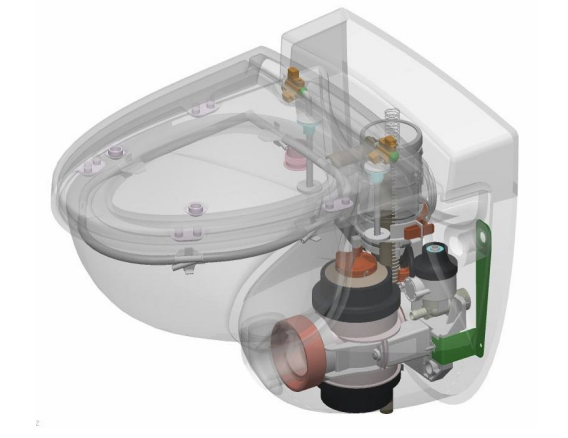
Step 1: The Vacuum System Maintains Negative Pressure
A vacuum generation unit creates and maintains negative pressure within the sealed drainage pipework.
This pressure difference provides the force needed to transport wastewater through the system without relying entirely on gravity.
Step 2: The Toilet Is Flushed
When the user presses the flush button, the toilet’s control mechanism activates the flushing sequence.
A small amount of water helps rinse the bowl while the discharge valve opens.
Step 3: Waste Is Drawn Into the Pipework
The pressure difference between the surrounding atmosphere and the vacuum drainage network causes air and waste to move rapidly through the open discharge valve.
This removes wastewater from the toilet bowl and carries it into the sealed pipework.
Step 4: Wastewater Travels Through the Drainage Network
The combination of airflow and pressure difference transports wastewater through the vacuum drainage system.
Unlike conventional gravity drainage, vacuum pipework can be designed to accommodate more flexible routes, including sections that rise or run horizontally, subject to appropriate system design.
Step 5: The System Resets
Once the flushing sequence is complete, the discharge valve closes and the toilet is ready for its next use.
The vacuum generation equipment continues maintaining the required pressure within the drainage network.
What Are the Main Components of a Vacuum Toilet System?
A commercial vacuum toilet installation typically consists of several interconnected components.
Vacuum Toilet Bowl
The toilet bowl is designed to work with a low-water flushing mechanism and a vacuum discharge valve.
Discharge Valve
The discharge valve controls when wastewater enters the vacuum drainage network. It opens during the flushing sequence and closes afterwards to maintain system pressure.
Vacuum Pipework
A sealed network of pipes transports wastewater using the pressure difference created by the vacuum generation equipment.
The pipework must be correctly designed to accommodate the building layout, expected usage and system operating requirements.
Vacuum Generation Unit
Vacuum pumps or other suitable vacuum generation equipment maintain the required negative pressure within the system.
Wastewater Collection Equipment
Wastewater is collected and subsequently discharged into an appropriate drainage or treatment system.
The exact equipment configuration depends on the installation and the manufacturer’s system design.
How Much Water Does a Vacuum Toilet Use?
One of the biggest advantages of vacuum toilets is their low water consumption.
Many commercial vacuum toilets use approximately 1–1.5 litres of water per flush, compared with around 4–6 litres for a typical modern conventional full flush.
For example, consider a commercial building with 100 toilets, each flushed 20 times per day.
| Vacuum Toilets | Conventional Toilets | |
|---|---|---|
| Water per flush | 1.2 litres | 6 litres |
| Daily flushes | 2,000 | 2,000 |
| Daily water consumption | 2,400 litres | 12,000 litres |
| Annual water consumption | 876,000 litres | 4,380,000 litres |
In this illustrative scenario, vacuum toilets could save approximately 3.5 million litres of water annually, equivalent to an 80% reduction in flushing water consumption.
Actual savings will vary depending on toilet models, usage patterns and the conventional system being replaced. The calculation also excludes other system water requirements.
For high-traffic commercial environments, reducing flushing water consumption can contribute to lower operating costs and improved water efficiency.
What Are the Benefits of Vacuum Toilets?
Reduced Water Consumption
Vacuum toilets require considerably less flushing water than many conventional toilets, helping businesses reduce water consumption.
Flexible Drainage Installation
Vacuum drainage systems can offer greater flexibility when routing pipework around structural obstacles or within existing buildings.
This can be particularly useful in refurbishment projects where installing conventional gravity drainage would require significant building alterations.
Smaller Pipework
Vacuum drainage systems may use smaller-diameter pipes than equivalent conventional gravity systems, depending on the installation.
This can help reduce space requirements within service voids and other restricted areas.
Suitable for Challenging Building Layouts
Vacuum drainage can be beneficial where conventional drainage falls are difficult to achieve, such as in basements, large commercial developments and buildings with complex layouts.
Long-Term Water Efficiency
In buildings with high toilet usage, reduced flushing water consumption may deliver substantial water savings over the system’s operational lifetime.
Are There Any Disadvantages to Vacuum Toilets?
Although vacuum toilets offer several benefits, there are also important considerations.
Initial installation costs: A complete vacuum drainage system may require additional equipment, including vacuum pumps, collection tanks and specialist controls.
Flushing noise: Vacuum toilets can produce a distinctive flushing sound as air and wastewater are drawn into the drainage network.
Maintenance requirements: Components such as discharge valves, pumps and controls require appropriate servicing and maintenance.
Electrical dependence: Most commercial vacuum systems require electricity to operate their vacuum generation equipment.
For these reasons, vacuum toilet systems should be carefully assessed against the requirements of each building.
Vacuum Toilets vs Traditional Toilets: What’s the Difference?
The main difference between vacuum toilets and traditional toilets is how they transport wastewater.
| Feature | Vacuum Toilet | Traditional Toilet |
|---|---|---|
| Waste removal | Vacuum pressure | Water and gravity |
| Water consumption | Typically 1–1.5 litres per flush | Often 4–6 litres per full flush |
| Pipework | Sealed vacuum drainage network | Gravity drainage pipes |
| Drainage flexibility | Greater flexibility in certain layouts | Requires suitable pipe gradients |
| System equipment | Vacuum generation and controls | Conventional drainage infrastructure |
| Maintenance | Specialist mechanical components | Standard plumbing maintenance |
| Typical applications | Commercial and specialist buildings | Residential and commercial buildings |
Vacuum toilets are particularly useful where water conservation and drainage flexibility justify the additional system requirements.

Can Vacuum Toilets Be Installed in Existing Buildings?
Yes, vacuum toilets can be installed in many existing buildings, making them a potential solution for refurbishment and redevelopment projects.
Because vacuum drainage systems do not rely exclusively on gravity, pipework may be routed around existing structures or through areas where conventional drainage installation would be difficult.
However, installation feasibility depends on several factors, including:
- Available space for vacuum generation equipment
- Existing drainage infrastructure
- Building layout and pipework routes
- Number of toilets and expected usage
- Electrical and maintenance requirements
- Applicable building regulations and technical standards
A specialist assessment is recommended before deciding whether vacuum drainage is appropriate for an existing property.
Where Are Vacuum Toilets Used?
Vacuum toilet systems are used across a variety of commercial and specialist environments.
Airports and Transport Hubs
Vacuum drainage can provide water-efficient wastewater collection across large facilities with complex layouts.
Hotels and Hospitality
Hotels can benefit from reduced water consumption and flexible drainage arrangements, particularly during refurbishment projects.
Offices and Commercial Developments
Commercial buildings with large numbers of toilets may benefit from lower flushing water usage and adaptable drainage infrastructure.
Railway Facilities
Vacuum toilets are commonly associated with railway applications, where water conservation and controlled wastewater collection are important.
Refurbishment Projects
Vacuum drainage can provide an alternative where existing building structures make conventional gravity drainage difficult to install.
Frequently Asked Questions About Vacuum Toilets
Do vacuum toilets need electricity?
Most commercial vacuum drainage systems require electricity to operate vacuum generation equipment and associated controls. Appropriate backup arrangements may be necessary where continuous operation is important.
Are vacuum toilets hygienic?
Vacuum toilets can provide hygienic wastewater removal when correctly designed, installed and maintained. Their sealed drainage systems help contain wastewater during transportation.
Are vacuum toilets noisy?
Vacuum toilets generally produce a short, distinctive flushing sound. Noise levels depend on the toilet model, installation and surrounding environment.
Can a vacuum toilet work without water?
Most commercial vacuum toilets still require a small amount of water to rinse the bowl and support flushing. They are low-water systems rather than completely waterless toilets.
How long do vacuum toilets last?
The operational lifespan depends on the equipment, usage, installation quality and maintenance. Regular servicing and timely replacement of worn components can help extend system life.
Are vacuum toilets suitable for commercial buildings?
Yes. Vacuum toilets can be particularly suitable for commercial buildings where reducing water consumption or overcoming drainage constraints is a priority.
Commercial Vacuum Toilet Solutions from EVDS
At European Vacuum Drainage Systems (EVDS), we specialise in Evac vacuum drainage technology for commercial and specialist applications across the UK.
Whether you’re planning a new development, upgrading an existing building or exploring alternatives to conventional gravity drainage, our team can help you understand the available vacuum toilet and wastewater collection solutions.
We work with businesses and project teams to identify suitable equipment and drainage arrangements based on their specific requirements.
Looking for vacuum toilets for your commercial project?
Contact EVDS to discuss your requirements and find out more about our vacuum toilet and drainage solutions.